AI Privilege Protection Checklist for Law Firms
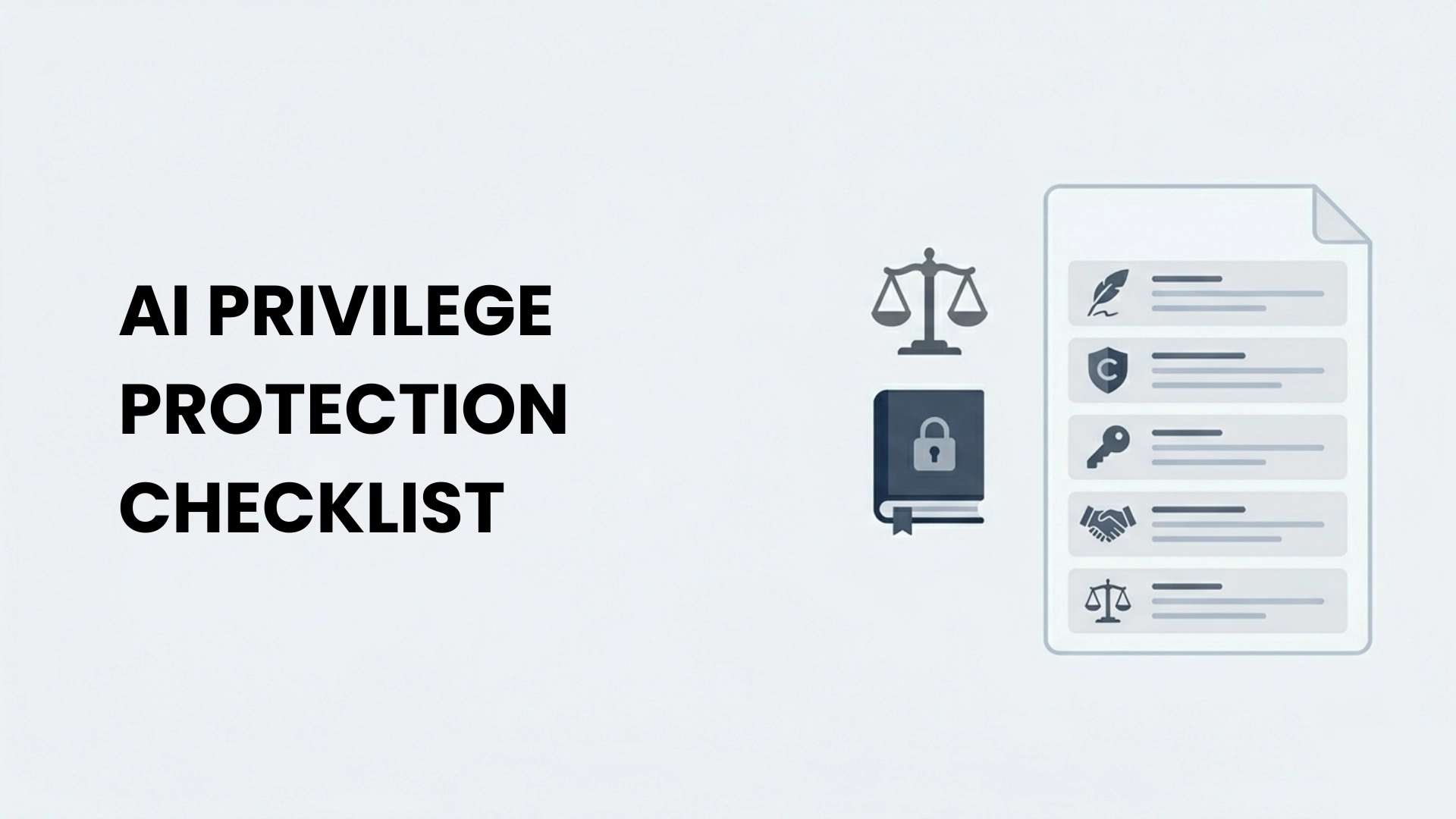
10 steps to protect attorney-client privilege when using AI — built around the Heppner analysis.
Ethics partners, managing partners, and general counsel at law firms that use AI tools on client matters and need to confirm their AI controls satisfy the ABA Rule 1.6 ‘reasonable efforts’ standard after US v. Heppner.
US v. Heppner held that using a consumer AI platform on legal matters may constitute disclosure to a third party, extinguishing the confidentiality requirement on which privilege depends. Most firms do not have the specific technical controls — zero data retention, anonymization, prohibition on model training use — that the Heppner analysis requires.
A 10-step privilege protection checklist with explanation of what each step addresses and a privilege risk matrix covering five common AI usage scenarios: personal ChatGPT use on client matters, firm-approved AI with anonymization, AI for general research, AI for discovery document review, and AI-drafted filings in courts with disclosure requirements.







 Data Privacy
  Data Provenance
  Content Generation